Adolescence: Beyond the “Bad Boy” Label

Updated: Aug 24
A clinical look at Jamie, shame, masculinity and youth violence
Netflix’s four-part drama does not hand us a neat diagnosis. It asks a more unsettling question: how can an ordinary child, an ordinary family and an ordinary school become part of an extraordinary act of violence?
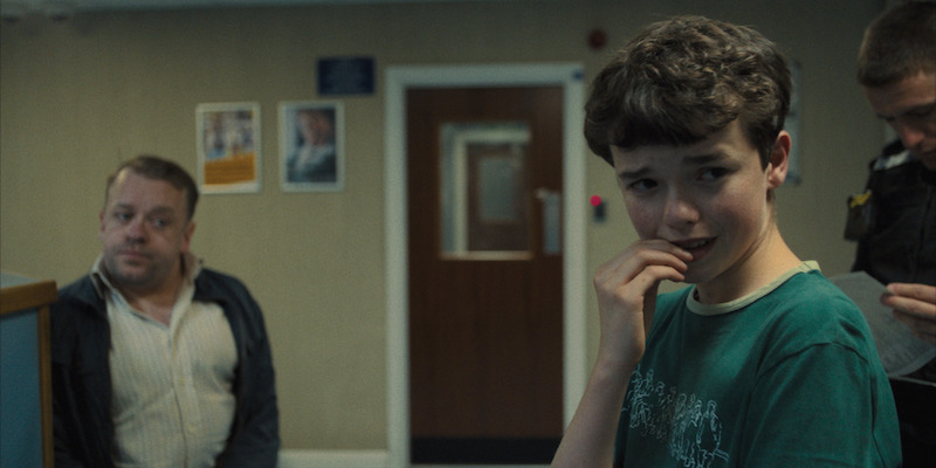
The series makes us hold two truths at once: Jamie is a frightened child, and he is responsible for a fatal act. Photography: Ben Blackall/Netflix. Official promotional still: © Netflix.
THE SHORT ANSWERAdolescence does not show enough evidence to diagnose Jamie with a psychiatric disorder. It depicts a developing boy whose shame, rejection, entitlement, anger, online misogynistic ideas and social environment may have converged around violence. Those factors can help us formulate what happened; they do not excuse it, and none of them alone predicts murder. |
A child can be frightened-and responsible
Adolescence begins with a raid. Armed police enter the Miller home and arrest 13-year-old Jamie for killing Katie, a girl from his school. He cries, shakes and wets himself. His father, Eddie, sees a terrified little boy. By the end of the first episode, CCTV footage leaves no room for denial: Jamie stabbed Katie.
That combination is the drama’s ethical centre. Jamie is not presented as a miniature adult or a horror-movie monster. He is still a child, with a child’s dependence, fear and unfinished development. Yet childhood does not erase agency or the devastation done to Katie, her family and the wider community. Developmental understanding and accountability can exist in the same sentence.
Created by Jack Thorne and Stephen Graham and directed by Philip Barantini, the 2025 limited series follows the arrest, the school investigation, a psychological assessment and the Miller family’s life after the crime. Each episode unfolds in one continuous shot. The technique prevents the viewer from escaping into a convenient cut: discomfort has to be endured in real time.
The story is fictional. Graham has said it grew from reports of young men killing girls in Britain rather than from one specific case. The creators deliberately chose an apparently ordinary family so that viewers could not file the violence away as something that happens only in homes marked by an obvious stereotype.
What disorder does Jamie have?
The clinically honest answer is: the series does not tell us. A diagnosis requires a developmental history, information from several settings, assessment of symptoms over time, collateral reports and careful exclusion of other explanations. Four dramatic episodes-even an extraordinarily revealing interview-cannot provide that.
The urge to diagnose is understandable. A label can make an unbearable act feel contained: if Jamie is a psychopath, a sociopath or simply “evil”, then perhaps he belongs to a category far away from ordinary families. But premature labels can create false certainty and teach viewers the wrong lesson about both mental illness and violence.
LABEL VIEWERS MAY USE | WHAT IT WOULD REQUIRE | WHAT THE SERIES ACTUALLY GIVES US |
Conduct disorder | A repetitive, persistent pattern that seriously violates others’ rights or age-appropriate norms-not one isolated criminal act. | One extremely serious offence, fragments of school and family life, and too little longitudinal evidence. |
Antisocial personality disorder | An adult diagnosis requiring a pervasive pattern and a detailed earlier history. It is not formally diagnosed at age 13. | A child whose personality and capacities are still developing. |
Psychopathy / “sociopathy” | Specialist assessment of enduring interpersonal, emotional and behavioural traits. “Sociopath” is not a precise clinical diagnosis. | Mixed behaviour: fear, tenderness, hostility, self-pity, control, anger and moments of vulnerability. |
Incel | Not a psychiatric disorder. The term refers to an identity or online subculture organised around involuntary celibacy; some spaces promote misogyny and fatalism. | Ideas and codes associated with the manosphere, but not enough to establish Jamie’s identity, depth of involvement or online pathway. |
NICE guidance is explicit that isolated antisocial or criminal acts are not sufficient for a conduct-disorder diagnosis.
CLINICAL PRINCIPLEA diagnosis describes a pattern of functioning; it is not a synonym for a terrible act. Psychiatric diagnosis and violence-risk formulation are related but different tasks. |
The formulation is richer than the label
Clinicians often use formulation to organise a person’s difficulties:
What made them vulnerable?
What triggered the event?
What kept the pattern going?
What strengths or relationships might reduce future risk?
The result is a working explanation, not a moral pardon and not a claim that one factor caused everything.
1. Adolescence: a mind under social pressure
At 13, social status can feel less like a preference and more like survival. Adolescent development brings growing independence, intense sensitivity to peer evaluation and a still-maturing capacity to pause under emotional pressure. Research does not say teenagers are irrational or incapable of responsibility. It says decisions can become especially vulnerable to immediate emotion, reputation and peer context.
Jamie’s world is watched, ranked and commented on. A rejection is not simply private disappointment; it can become public evidence about who he is. The series understands that a young person may know an action is wrong while still failing, in a heated moment, to give distant consequences the weight they deserve.
2. Shame: “Something is wrong with me”
Guilt says, “I did something bad.” Shame says, “I am bad, weak, undesirable or ridiculous.” When shame becomes intolerable, some people collapse, hide or attack themselves. Others defend against it by blaming, controlling or humiliating somebody else. Anger can feel more powerful than exposure.
Jamie repeatedly reaches for reassurance about his attractiveness and worth. When the answer he hopes for is not supplied, vulnerability turns quickly into pressure and rage. The change does not prove a diagnosis. It illustrates how shame can be converted into hostility when a person has little language for hurt and a strong need to recover status.
3. Rejection sensitivity: when ambiguity feels like attack
Rejection sensitivity is the tendency to expect, detect and strongly react to rejection. It is not a disorder. A meta-analysis found a small but reliable association with aggression, especially angry rejection sensitivity and reactive aggression. That association is not destiny: most rejection-sensitive people never become violent.
In Jamie’s interpretation, Katie’s refusal and online comments become more than boundaries. They are humiliations that seem to define his value. The danger lies not in rejection itself but in the meaning attached to it: “If she does not choose me, she has degraded me-and I am entitled to restore the balance.”
4. Entitlement: pain becomes somebody else’s debt
Rejection hurts. Entitlement adds a second belief: because I hurt, the other person owes me attention, affection, sex, apology or restoration of status. This is where understandable emotion can become coercive thinking. Katie’s right to refuse disappears behind Jamie’s account of what her refusal did to him.
Empathy does not require us to centre the person who caused the harm. A clinically compassionate reading can recognise Jamie’s humiliation while remaining clear that Katie was not responsible for regulating his self-worth.
5. Masculinity learned as performance
The series is not arguing that boys or masculinity are inherently dangerous. It is asking what happens when a boy learns that sadness is weakness, respect is dominance, desirability is rank and a girl’s rejection is a public loss of manhood. Under those rules, ordinary vulnerability has nowhere safe to go.
Healthy masculinity can include tenderness, responsibility, repair, courage and protection without control. The problem is not male identity; it is a narrow script in which emotional pain must be hidden or converted into power over somebody else.
6. The online manosphere: an amplifier, not a diagnosis
Episode 2 exposes a language the adults barely recognise: emojis, status codes and ideas associated with “red pill”, “black pill” and incel communities. These spaces are not one unified movement. Ofcom’s qualitative research describes a fragmented ecosystem ranging from humour, fitness and self-improvement to closed communities containing misogyny, hopelessness and resentment.
Online content may offer a ready-made explanation for private pain: dating is a rigged hierarchy; appearance fixes destiny; women control access to worth; rejection proves injustice. Algorithms, repetition and group belonging can make those explanations feel normal. Yet exposure is not a simple cause of violence. Many young people encounter harmful material without adopting it, and a small qualitative study cannot establish prevalence or causation.

At school, adults are physically present but often culturally several steps behind the young people they are trying to understand. Photography: Ben Blackall/Netflix.
THE MOST USEFUL CAUSAL SENTENCE The internet did not “make Jamie kill”. It may have supplied language, status rules and justification that interacted with his existing vulnerabilities, relationships, choices and circumstances. |
Episode 3: assessment is not therapy
The encounter between Jamie and Briony Ariston is the series’ clinical centrepiece. It looks intimate, but it is not an ordinary therapy session. Briony is gathering information in a forensic context. Her task is not simply to comfort Jamie or help him feel better; it is to understand his functioning and contribute to decisions made within a legal and secure-care system.
That changes the relationship. A therapist usually works towards the client’s goals and wellbeing. A forensic evaluator has a third-party question, limits to confidentiality and an obligation to remain professionally independent. Warmth and rapport still matter, but they serve accurate assessment rather than an alliance that belongs only to the two people in the room.

The power in Episode 3 lies in the changing distance between curiosity, reassurance, testing, control and fear. Photography: Ben Blackall/Netflix. Official promotional still: © Netflix.
What Briony is watching
The story Jamie tells: how he explains Katie, himself, the offence and responsibility.
The meaning of rejection: whether a boundary is experienced as disappointment, humiliation, injustice or attack.
Emotional regulation: how quickly Jamie moves between charm, shame, demand, anger, intimidation and dependence.
Empathy and perspective-taking: whether Katie appears as a full person or mainly as a character in Jamie’s story.
Response to limits: what happens when Briony will not provide the reassurance, food, information or emotional reaction he wants.
Control of the interaction: how questions, proximity, politeness and threat are used to shape the room.
Capacity for reflection: whether Jamie can hold mixed truths or retreats into blame and all-or-nothing accounts.
What a real assessment would still need
A responsible youth forensic assessment would normally extend far beyond one conversation. It could include developmental and medical history; mental-state examination; neurodevelopmental needs; trauma and attachment history; school functioning; substance use; prior aggression or threats; online activity; peer relationships; family information; the offence pathway; access to weapons; protective relationships; and reports from several adults and services.
The evaluator would also consider alternative explanations and co-occurring difficulties. The aim is not to find the single hidden disorder that “caused” violence. It is to build a testable account of when risk may rise, what could interrupt it and which supports or restrictions are needed.
DO NOT MISTAKE DISCOMFORT FOR DIAGNOSIS Jamie’s chilling moments do not prove psychopathy. His frightened or affectionate moments do not prove safety. Risk assessment depends on patterns, history, context and corroboration-not the viewer’s strongest emotional reaction to one scene. |
Violence risk: neither prophecy nor checklist
Violence-risk assessment estimates the likelihood of a specific kind of harm under particular circumstances and over a stated period. It cannot predict the future with certainty. Structured professional judgement helps clinicians consider evidence-based risk and protective factors while still producing an individual formulation.
HISTORICAL / CONTEXTUAL | CHANGEABLE / DYNAMIC | PROTECTIVE |
Previous violence, threats or escalating aggression | Current anger, grievance or humiliation | A trusted adult who can hear difficult disclosures |
Past victimisation, loss or developmental adversity | Access to a potential victim or weapon | Engagement with school, treatment or supervision |
Persistent school, peer or family difficulties | Rigid blame, entitlement or violent ideation | Capacity for empathy, reflection and repair |
Earlier rule-breaking across settings | Substance use, acute crisis or destabilisation | Realistic goals, routines and prosocial peers |
Online communities reinforcing grievance | Leakage: threats, plans or warning communications | Restricted access, safety planning and responsive services |
These examples are educational, not a do-it-yourself risk tool. Their meaning depends on timing, severity, combinations and the individual young person.
What Adolescence gets psychologically right
A child who commits violence is still a child. Development matters for assessment, intervention and justice without cancelling responsibility.
Violence is usually multicausal. The series resists a single villain-parenting, school, the internet, masculinity or mental illness-and examines their possible interaction.
Shame often hides behind anger. Jamie appears most dangerous when his fragile self-image is exposed and he tries to regain control.
Online culture can change the meaning of offline events. A refusal becomes a status verdict when interpreted through a rigid hierarchy of desirability.
Adults can love a child and still not know his inner world. Closeness at home does not automatically reveal what happens in group chats, corridors or private searches.
Schools may see behaviour without understanding its language. Emojis, jokes and coded humiliation can carry meanings that escape adult monitoring.
Assessment is relational. Jamie reveals himself not only through answers but through how he handles boundaries, uncertainty, disappointment and power.
Harm spreads through systems. Katie is the direct victim, but the consequences move through both families, peers, professionals and the community.
Where viewers should be cautious
Most rejected, bullied or lonely boys do not become violent. These experiences are common; homicide is rare.
Mental illness is not a shortcut explanation for murder. Most people with psychiatric disorders are not violent, and the series does not establish a disorder in Jamie.
Online misogyny is neither harmless nor a complete causal story. Exposure, adoption, reinforcement and action are different stages.
Parents are neither omnipotent nor irrelevant. They cannot see everything, but attentive relationships, boundaries and digital literacy still matter.
“Bad boy”, “monster” and “psychopath” may express horror, but they stop inquiry. Safety improves when professionals investigate patterns and pathways.
Understanding is not excusing. A formulation explains possible mechanisms so that risk can be managed and future harm prevented.
For adults around boys: eight better conversations
The series does not offer a foolproof prevention list, and neither can psychology. It does, however, suggest places where ordinary adults can become more curious, more available and more prepared to act.
1. Ask about the digital world as a real place. “Which accounts make boys your age feel better or worse about themselves?” may open more than “Are you looking at bad content?”
2. Build emotional vocabulary before crisis. Help young people distinguish rejection, envy, shame, humiliation, loneliness, anger and grief.
3. Treat misogynistic humour as information. Challenge the harm without using the conversation only to humiliate the young person.
4. Teach that consent includes disappointment. Another person’s no can hurt and still remain valid; pain creates a need for support, not a debt owed by the other person.
5. Do not wait for perfect disclosure. Sudden isolation, escalating grievance, threats, stalking behaviour, weapon interest or marked changes in functioning deserve calm follow-up.
6. Respond to threats as safety information. Do not dismiss them as drama or investigate alone; involve the school’s safeguarding lead, relevant professionals or emergency services according to immediacy.
7. Create more than surveillance. Reasonable monitoring and limits matter, but young people also need adults with whom they can admit shame without being destroyed by it.
8. Offer positive ways to belong. Mentors, teams, creative work, responsibility and emotionally honest male role models can widen the scripts available to boys.
A USEFUL OPENING QUESTION “What are boys your age being told they must be-and what happens to a boy who feels he cannot become it?” |
The family after the unthinkable
The final episode returns to Eddie, Manda and their daughter Lisa. Their grief has no clean category. They love Jamie, recoil from what he did, mourn Katie, endure public hatred and question every ordinary parenting decision. This is sometimes called ambiguous or disenfranchised grief: the loved person is alive, but the family they thought they knew has disappeared, and sympathy from others may be complicated or withheld.

The finale refuses a simple parental verdict. Manda and Eddie are left with love, responsibility, grief and questions that cannot be neatly separated. Photography: Ben Blackall/Netflix.
The ordinary-family choice is not proof that parenting is irrelevant. It is a warning against fantasy: there may be no single broken home, obvious diagnosis or dramatic warning sign that lets the rest of us feel immune. Prevention belongs across families, schools, platforms, health services, youth services and communities.
Questions for after the final episode
• Why is it emotionally difficult to hold Jamie’s childhood and his responsibility at the same time?
• When does shame become grievance, and what might interrupt that movement?
• Which adults in the series know pieces of Jamie’s world? Why does nobody hold the whole picture?
• What is the difference between explaining violence and excusing it?
• Does Briony’s warmth help the assessment, complicate it, or both?
• What does the one-take format make you feel that conventional editing might allow you to avoid?
• Whose perspective is least visible in the story, and how does that shape the audience’s empathy?
Final thought
Calling Jamie a bad boy gives us a villain. Adolescence asks us to tolerate something harder: he is a child who caused irreversible harm, and understanding the path towards that harm requires more than one label.
The purpose of clinical thinking is not to make violence less serious. It is to replace superstition with careful questions: Which beliefs turned pain into entitlement? Which relationships could have interrupted the pathway? Which signals were visible, and to whom? What must change around this young person so that risk does not become destiny?
Katie’s death must remain at the moral centre. Prevention begins when we can listen to boys before grievance hardens-without asking girls and women to carry the cost of boys’ emotional education.
TAKE THIS WITH YOU Compassion without accountability is incomplete. Accountability without curiosity teaches us very little about prevention. |
Glossary
Adolescence - The developmental period between childhood and adulthood, involving biological, cognitive, emotional and social change. Development continues; it does not remove responsibility.
Conduct disorder - A diagnosis involving a repetitive and persistent pattern of behaviour that seriously violates others’ rights or major age-appropriate norms. One isolated offence is not enough.
Forensic psychological assessment - An evaluation carried out to answer a legal or justice-related question. It differs from ordinary therapy in purpose, confidentiality and professional obligations.
Formulation - A working explanation of how vulnerabilities, triggers, maintaining processes and protective factors may fit together for one person.
Incel - Short for “involuntarily celibate”. It can describe a personal identity or online subculture; some incel communities promote misogyny and fatalistic “black pill” beliefs. It is not a psychiatric diagnosis.
Manosphere - A broad, fragmented collection of online communities focused on men, masculinity, dating and gender politics. Content ranges from self-improvement to extreme misogyny.
Protective factor - A quality, relationship or circumstance that may reduce the likelihood of harm or support safer functioning.
Rejection sensitivity - A tendency to anxiously or angrily expect, notice and react strongly to rejection. It is a psychological pattern, not a diagnosis.
Risk factor - A characteristic or circumstance associated with a higher likelihood of an outcome. It is not proof that the outcome will occur.
Shame - A painful sense that the self is defective, exposed or unworthy. It differs from guilt, which focuses more on a specific action.
Structured professional judgement - A risk-assessment approach that uses evidence-informed factors and professional formulation rather than relying only on intuition or a numerical score.
Sources and further reading
Netflix. Adolescence: official series page and synopsis. View source
Netflix Tudum. “Adolescence: Everything to Know About the One-Shot Crime Drama.” Series background, cast and official photographs. View source
Netflix Tudum. “Adolescence Episode 3: Inside the ‘Chess Match’ Between Jamie and Briony.” View source
Netflix Tudum. “Stephen Graham on Adolescence and the Conversations It Was Made to Start.” View source
Netflix Tudum. “Why Did Jamie Do It? The Creators on the Adolescence Finale.” View source
National Institute for Health and Care Excellence (NICE). Antisocial behaviour and conduct disorders in children and young people: recognition and management (CG158). View source
National Institute for Health and Care Excellence (NICE). Antisocial personality disorder: prevention and management (CG77), context. View source
Ofcom. The Manosphere Unmasked: qualitative research on engagement, pathways and potential harms, 13 June 2025. View source
National Research Council. Reforming Juvenile Justice: A Developmental Approach. National Academies Press, 2013. View source
Crone, E. A., & Konijn, E. A. (2018). Media use and brain development during adolescence. Nature Communications, 9, 588. View source
Somerville, L. H. (2013). The teenage brain: sensitivity to social evaluation. Current Directions in Psychological Science, 22(2), 121–127. View source
Gao, S., Assink, M., Cipriani, A., & Lin, K. (2021). Associations between rejection sensitivity, aggression and victimisation: a meta-analytic review. Trauma, Violence, & Abuse, 22(1), 125–135. View source
Barboni, L., von Hagen, A., Piñeyro, S., & Senabre, I. (2024). Predictive validity of the Structured Assessment of Violence Risk in Youth: a systematic review. Psychology, Crime & Law. View source


Comments